
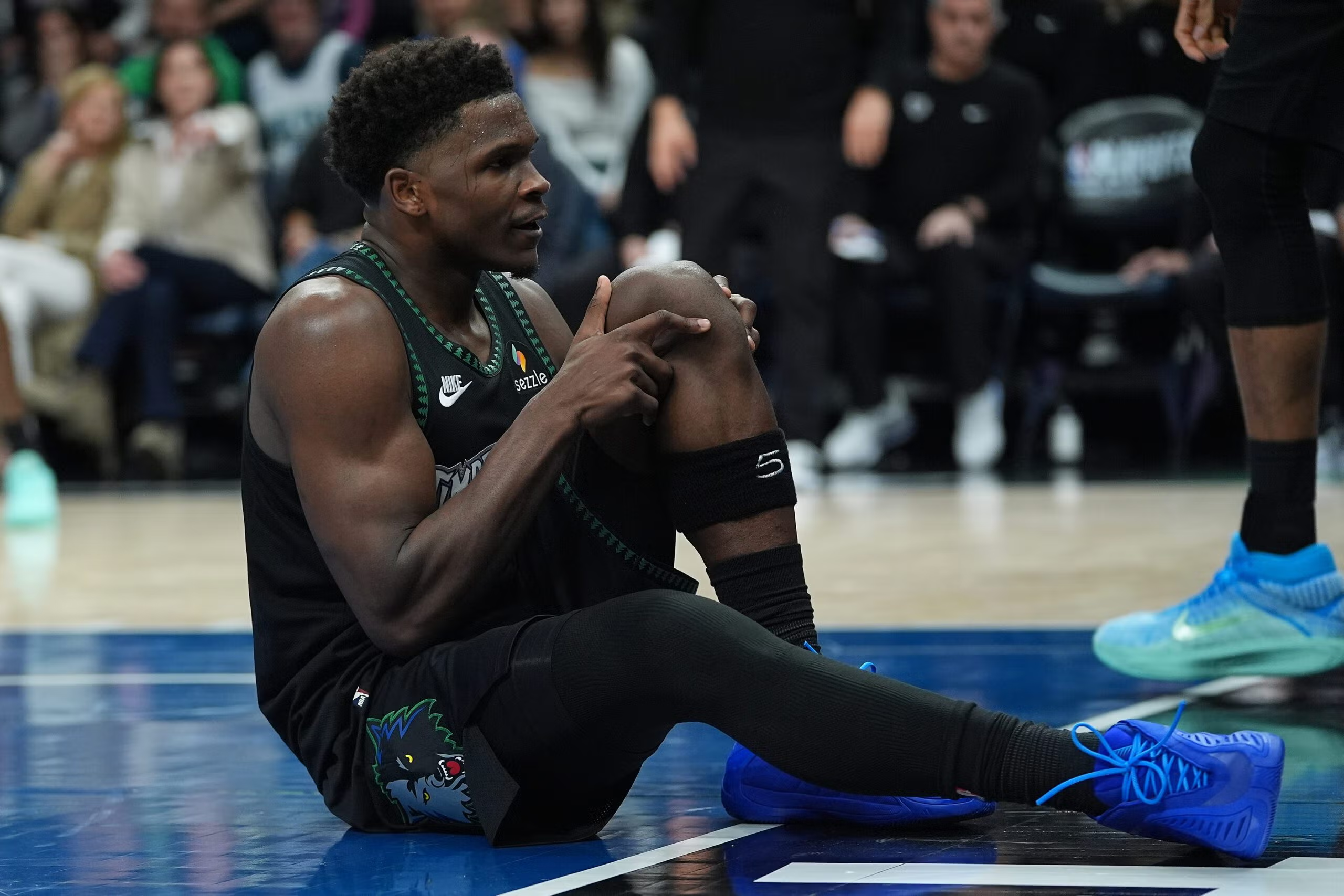
The aspirations of the Minnesota Timberwolves to at least reach the Western Conference Finals have taken a major hit.
Anthony Edwards is out of the Timberwolves lineup for the foreseeable future with a hyperextended knee and a bone bruise.
This injury doesn’t just hurt Minnesota—it potentially alters the Western Conference playoff landscape.
Here’s how it could play out depending on matchups and how far the Timberwolves may advance.
⸻
🐺 Minnesota Without Anthony Edwards: What Changes Immediately
Without Edwards, the Timberwolves lose:
- Their primary shot creator in late-clock situations
- Their rim pressure + transition engine
- Their emotional tone-setter (pace, aggression, confidence)
That forces Minnesota to shift its focus onto:
- Julius Randle- with Edwards out of the lineup Ranlde will be looked upon to shoulder more of the offensive load. However Randle has struggled to efficiently put the ball in the basket this postseason. In Minnesota’s four playoff games Randle is averaging 17.5 points and 7.8 rebounds on 42% from the field and just 18.2% from downtown.These numbers are down from his regular season per game numbers of 21.1 points on 48.1% from the floor and 31.5% from three and his postseason production of 21.7 points and 5.9 rebounds on 50.2% from the field and 38.5% from the land of three.
- Ayo Dosunmu- with the postseason ending injury to starting guard Donte DiVincenzo, Dosunmu will likely be moved into the starting lineup. Dosunmu can provide scoring, as was emphatically displayed with his 43-point explosion in the Timberwolves 112-96 win in Game 4. He also be an effective point of attack defender.
- Naz Reid- The Timberwolves will need more consistency from Reid to help fill the offensive void created by Edwards’ absence. The former Sixth Man of the Year is averaging 9.5 points and 6.8 rebounds through the first four games of the Denver series but will need to replicate or exceed his regular season production of 13.6 points and 6.2 rebounds per game.
Defensively, they can still survive—but offensively, they become much more predictable and easier to scheme against.
⸻
🆚 If Minnesota Faces Oklahoma City (Thunder)
This is the nightmare matchup without Edwards.
Why OKC benefits:
- They can load up on Randle without fear of Edwards punishing rotations
- Their perimeter defense will not have to deal with the pressure Edwards would consistently exert.
- They can speed up the game, forcing Minnesota to play at their pace.
What it becomes:
- A series decided by Shai Gilgeous-Alexander shot creation vs. Minnesota’s offense-by-committee
- Can Minnesota generate easy baskets to help fill the Anthony Edwards sized hole in their offense and to avoid playing against the set Thunder defense as much as possible?
Edge: Thunder, and fairly comfortably without Edwards.
⸻
🆚 If Minnesota Faces Denver Again
This is more nuanced.
Why Denver is still dangerous:
- Jokic forces constant defensive compromises
- Minnesota already needed Edwards to match Denver’s scoring bursts, and they would unquestionably miss his production.
But here’s the twist:
- Minnesota can still defend Denver fairly well (Gobert + team size)
- The nuggets are missing Aaron Gordon
- The issue becomes: who replaces Edwards’ 25–30 points per night?
What changes:
- Close games turn into Jokic control-time endings
- Minnesota loses their ability to answer Denver’s runs quickly
Edge: Nuggets, but more grind-it-out than OKC’s pace advantage.
⸻
🆚 If Minnesota Faces a Lower Seed (Clippers / Suns / Lakers-type matchup)
This is where Minnesota still has a chance.
Why:
- Defensive structure still travels
- Gobert could be more of a force/presence
But the concern:
- They don’t have a consistent bailout scorer in crunch time
- Defenses can key in on Randle without Edwards punishing switches
Result: Series becomes coin-flip instead of Minnesota favorite.
⸻
🧠 The Bigger Playoff Ripple Effect
Edwards’ injury does three major things to the West:
- Removes Minnesota from true contender tier (for now)
- Clears a smoother path for OKC
- Reduces the chaos factor that usually upsets top seeds
He’s one of the few players who can swing a playoff series almost by himself. Without him, Minnesota becomes a “system team,” not a “star-driven threat.”